

By Komsenso | Real-time fermentation monitoring
Low-alcohol and dealcoholized wines are no longer a catalogue curiosity — they have become a product line with real and growing demand: less alcohol, more moderation, and a consumer who expects the glass to lose neither character nor complexity. Familia Torres has led this category in Spain for years with its Natureo range, recognized at the World Alcohol-Free Awards 2025, and the Murcian Institute of Agri-Food Research and Development (IMIDA) has been working since 1997 on grape varieties — descendants of Monastrell, now registered as Myrtia, Gebas and Calnegre — designed specifically to accumulate less sugar and produce low-alcohol wines naturally. The competition exclusively evaluates drinks at or below this 0.5% threshold.
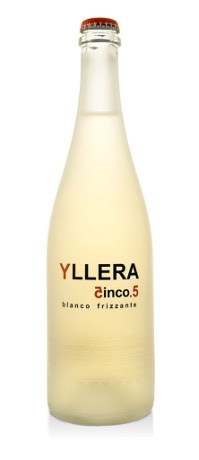
On top of the almost no alcohol drinks, another market with lower alcohol options are also becoming more and more popular. In the Rueda region, multiple wineries like Bodegas Yllera, have been producing low-alcohol wines like Yllera 5.5 Blanco Frizzante for a few years.
What gets talked about less, especially among those who haven’t yet had to produce it, is the real technical challenge. It’s exactly the opposite of what you’d expect: making a low-alcohol wine isn’t “fermenting less.” It’s fermenting with a far narrower margin of error than in conventional winemaking.
Many people keep asking us how these low-alcohol wines are made and whether any chemical product is required, so we decided to write this note to explain the two main ways of producing them and how Enobot can be a great help to winemakers and wineries interested in expanding their portfolio with low-alcohol products.
Two paths, one and the same demand for control
Of the two most common approaches, the first is physical post-fermentation dealcoholization: fermentation is allowed to reach its natural end conventionally, and the alcohol is then removed through processes such as the spinning cone column or low-temperature vacuum distillation. This is the method used by Torres in the aforementioned Natureo and by other large groups — first fermenting in stainless-steel tanks at 14–16°C for two weeks, then extracting the alcohol down to 0.5%, preserving aromas and structure. It’s a solid, well-documented technique; the problem is that it involves an investment that few wineries can usually afford for such innovative products. Equipment such as a spinning cone column installation or vacuum distillation gear reserves it, in practice, for large facilities or for those who can outsource the process.
The second route is arrested or controlled fermentation, and it’s the one most wineries use: the process is stopped before all the sugar has been converted into alcohol, usually by cooling the tank until the yeast enters a state of low activity. It’s more accessible and doesn’t require an investment in dealcoholization machinery — but it has a trade-off that is often underestimated: not only is the margin of error narrower, but you have to know how to find, document and reproduce the exact stopping point vintage after vintage to guarantee the same flavour in your wine.
The real problem: the stopping point moves, and almost no one is measuring it continuously
Here’s the figure that best illustrates the challenge. In IMIDA’s research programme on low-alcohol varieties derived from Monastrell, it reports that during alcoholic fermentation — carried out at 25°C — the tank’s density was checked twice a day. Just two daily readings, in a benchmark research project in Spain on precisely this type of wine — which is, in fact, very common practice across the industry.
And that’s the problem: the exact point at which a fermentation must be stopped to reach a target alcohol level is not fixed. It depends on the tank temperature, the yeast strain, the available nutrients, and the sugar-consumption rate in that specific batch — variables that change from one tank to another, and from one hour to the next. With two readings a day, the gap between a fermentation stopped at exactly the right point and one that has already overshot can be several hours during which the process kept going on its own. For a wine whose legal labelling depends on reaching a specific alcohol range — often below thresholds set by DO regulations or European rules — that margin has direct consequences. This is where fermentation monitoring solutions deliver enormous value and help guarantee a solid commercial product.
According to the technical review published in PMC on dealcoholization techniques, both physical methods and controlled fermentation have a direct, measurable impact on the phenolic composition, the volatile profile and the sensory characteristics of the wine — in other words, missing the stopping point affects not only the alcohol level but also the taste, the aroma and the stability of the final product.
What can go wrong when control isn’t continuous
Stopping the fermentation too late means a wine above the target alcohol level — and in appellations or markets where “low-alcohol” labelling has thresholds set by regulation (usually ≤11% or ≤9% abv), that can mean reclassifying the batch, losing the label claim or being rejected in certification.
Stopping it too early — or with insufficient cooling to fully inhibit yeast activity — leaves fermentable residual sugar in the bottle alongside viable cells. Concentrations above 2–4 g/L of residual sugar in the presence of active Saccharomyces are a sufficient condition to trigger a refermentation in the package: unwanted gas, excess pressure, haze and, in the worst case, the closure or the bottle breaking — a well-documented microbiological stability problem, as noted in the University of California, Davis guide on the subject.
In both cases, the root is the same: the decision to stop was made based on a single snapshot of the process — the last density reading — with no information about the actual trajectory or the speed at which sugar was still being converted.
What changes with continuous kinetics readings
This is where the difference between two readings a day and continuous monitoring stops being a technical nuance and becomes the difference between hitting the stopping point or not.
When density, temperature and fermentation kinetics are recorded continuously — not every twelve hours, but in real time — it’s possible to see the sugar-consumption curve at enough resolution to anticipate, with hours to spare, the exact moment to start cooling the tank. Not after confirming you’ve already passed the point. Before. And on top of that, every vintage is logged: you have the kinetic curve for each tank, comparable with previous years, which turns monitoring into the foundation you need to standardize and reproduce the process. To see how this plays out in a real winery, read the interview with María Sevilla, winemaker and production manager who works with Komsenso across multiple wineries.
This is exactly what Enobot makes possible: monitoring density, temperature and fermentation kinetics in every fermentation tank, 24/7, with non-invasive sensors that don’t interfere with normal cellar operations. For a winery developing low-alcohol lines through controlled fermentation, it isn’t just another operational improvement — it’s the difference between executing the technique with real control margin or depending, in practice, on the last manual reading happening to coincide with the critical moment.

Conclusion
Physical dealcoholization is the inevitable option for wines below 0.5% abv, with the investment that implies. For those adding a low-alcohol line without that CapEx, controlled fermentation is the viable alternative — and at Komsenso we can help you with a far smaller investment than you might imagine. Fermenting toward a specific target alcohol level isn’t a more relaxed style of winemaking. It is, technically, the one that can afford the least margin of error.
Are you adding low-alcohol wines to your production? Discover how Enobot, Komsenso’s real-time fermentation monitoring system, works, or explore our tailored solutions for wineries with specific integration needs.