
For decades, tracking alcoholic fermentation in the winery has relied on a method as simple as it is limited: the periodic measurement of must density. This practice — based on manual sampling and one-off analysis — has been enough to confirm whether wine fermentation is progressing or not, but it offers a fragmented view of a process that is, in reality, continuous, dynamic and extraordinarily complex.
Density lets you estimate the conversion of sugars into alcohol, and with it trace the classic fermentation curve. But reducing your understanding of the process to this single parameter is like trying to follow a film by watching only a few scattered frames. Between one measurement and the next, significant changes can occur that go completely unnoticed, which is why continuous wine fermentation monitoring is becoming essential. And in winemaking, more often than not, what you don’t see in time is what ends up making the difference.
The limitations of conventional sampling
The main problem with periodic sampling is its discontinuous nature. A daily measurement — or even two — doesn’t capture the real variability of the system. Fermentation doesn’t progress at a constant pace: there are phases of acceleration, moments of stress for the yeast, sharp thermal shifts or micro-events that can determine the final result.
On top of that, the very act of sampling introduces uncertainty. Which part of the tank is the sample taken from? Is it representative of the whole? In tanks of a certain volume, especially in fermentations with solids (as in reds), there can be significant differences between the top and the bottom, both in temperature and in the concentration of sugars, alcohol or phenolic compounds.
Added to this is a key factor: reaction time. By the time a winemaker detects a deviation in density, the problem has already started to show. In many cases, the intervention comes too late or is based on incomplete information, forcing conservative or corrective decisions rather than preventive ones.
Fermentation as a living system
Understanding fermentation as a living system means accepting that multiple variables interact simultaneously: temperature, nutrient availability, yeast activity, dissolved oxygen, CO₂ production, solids dynamics… All of them evolve over time and influence one another.
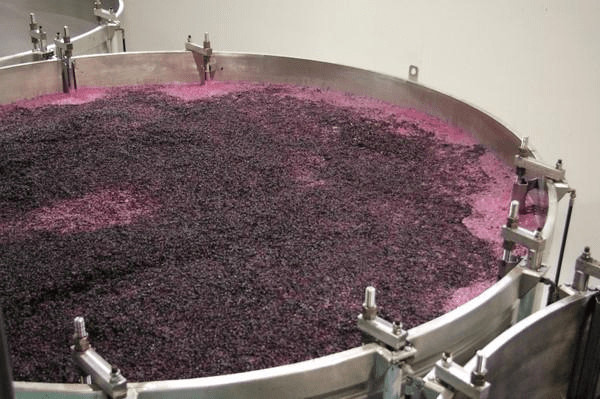
For example, a local rise in temperature can speed up yeast activity in a specific area of the tank, generating more CO₂ and altering the mixing dynamics. This, in turn, can affect extraction in the case of reds, or create gradients that lead to stratification. None of these phenomena is directly reflected in a simple density reading. It’s no coincidence that whether a wine is red, white or rosé depends largely on the fermentation, and not just on the type of grape.
And yet all of them have a direct impact on the final quality of the wine.
Sensing: from the isolated data point to continuous knowledge
Adding sensors to fermentation monitoring represents a paradigm shift. Instead of the isolated data point, you get a continuous signal. Instead of estimation, you gain direct observation.
Today it’s possible to monitor in real time variables such as temperature at different points in the tank, density without the need for sampling, the evolution of the CO₂ ratio or even indirect parameters related to fermentative activity. This information, recorded continuously, makes it possible to build a far more faithful picture of what is happening at every moment, and this advance places wineries at the forefront of the smart management and digital transformation of the wine sector, enabling a level of data traceability never seen before.
But the real value isn’t just measuring more — it’s measuring better and in context. Combining variables lets you interpret patterns: how the wine fermentation responds to a temperature change, what effect a pump-over has, how yeast activity evolves after a nutrient addition. This is exactly where AI in winemaking makes the difference: it turns that continuous data stream into actionable patterns that until now were lost between one reading and the next.
In short, you move from “seeing points” to “understanding processes”.
Early detection: anticipating instead of correcting
One of the biggest benefits of sensing is the ability to detect problems at very early stages, when they’re still easy to correct.
Stratification, for instance, can be identified by observing temperature or density differences between different levels of the tank. Detecting it in time makes it possible to adjust pump-overs or agitation before they affect the homogeneity of the fermentation or the extraction.
Inadequate thermal profiles —zones that are too hot or too cold— stop being an assumption and become measurable evidence. Understanding the impact of temperature control on wine quality makes it possible to optimise cooling or tank insulation far more precisely, avoiding irreversible sensory deviations.
A lack of nutrients or yeast stress can be inferred from changes in fermentation kinetics or CO₂ production, anticipating possible fermentation arrests before they happen. Instead of reacting to a stalled fermentation, the winemaker can step in while it’s still slowing down.
Even more subtle situations, such as deviations in the fermentation pace compared to previous campaigns, can be detected and analysed against comparable historical data.
Better information, better decisions
The direct consequence of having richer, real-time information is better decision-making. The winemaker stops working with approximations and starts basing decisions on evidence.
This translates into the ability to:
- Fine-tune the frequency and intensity of pump-overs.
- Optimise temperature profiles according to the real state of the fermentation.
- Dose nutrients more efficiently, avoiding both deficits and excesses.
- Detect deviations and act before they turn into bigger problems.
Instead of applying standard protocols, the door opens to adaptive management, where each tank is treated according to its specific evolution.
From control to style: impact on quality and consistency
Beyond operational efficiency, sensing has a direct impact on the final result of the wine. Better control of the fermentation makes it possible to preserve aromas, avoid faults, optimise extraction and, ultimately, express the potential of the grape more fully.
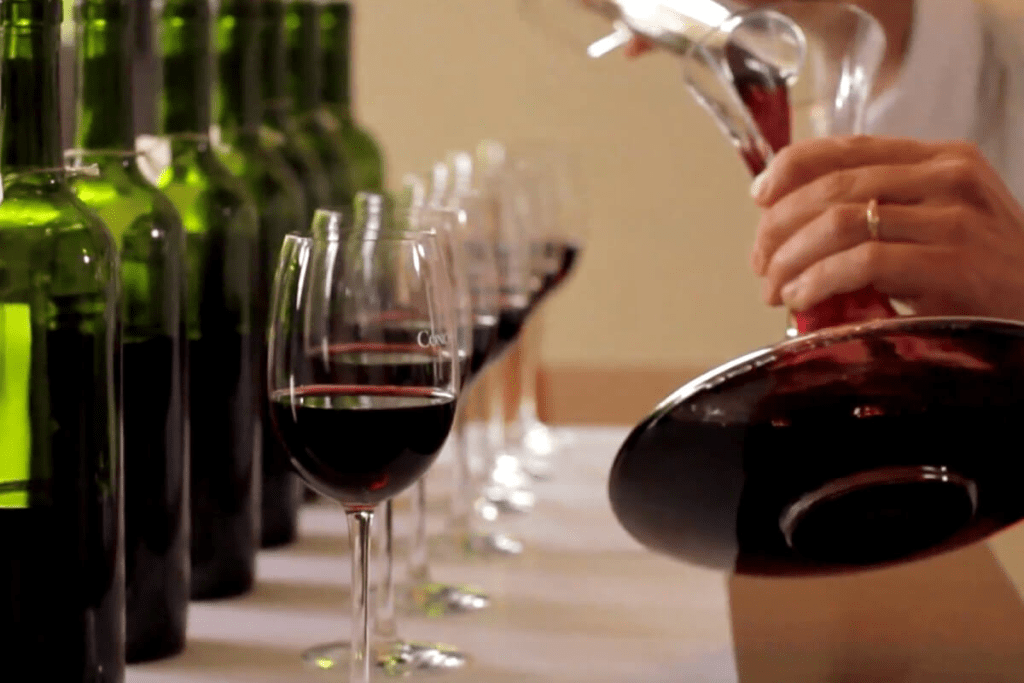
But there’s one aspect that is especially relevant in a professional context: consistency. Being able to reproduce a wine profile year after year requires understanding precisely what happened at each stage of the process. Continuous information makes it possible to document, compare and refine decisions, reducing variability between batches. That’s precisely what oenologist María Sevilla highlights in this interview, where she explains how data traceability lets her reproduce her best vintages.
In this sense, technology doesn’t replace the winemaker — it amplifies their judgement. It gives them an “augmented view” of the process, allowing them to act with greater confidence and less uncertainty.
A natural evolution of the craft
Winemaking has always been a combination of technical knowledge, experience and sensitivity. Sensing doesn’t break with this tradition — it takes it one step further.
Where there used to be intuition based on observation, there is now data to back it up. Where there was uncertainty, there is now traceability. And where you used to react, you can now anticipate.
In a process as delicate as fermentation, where small variations can have big consequences, having better information isn’t just a technological advantage: it’s a tool for making better wines.
Because, in the end, understanding better what happens inside a tank isn’t an end in itself. It’s the means to respect the raw material more precisely and turn that initial grape into a wine with more quality, more balance and greater coherence over time.
Where Enobot fits into all this
And that’s exactly why Enobot was born. After plenty of headaches and firefighting, a winemaking team from Castile and León reached out to our founders to see whether the process could be monitored to get a continuous — not just fragmented — view of what happens in each tank, and avoid dramas year after year.
Our fermentation AI technology measures density, temperature, fermentation kinetics and level in real time, and translates it into practical information: which tanks are on track, which are deviating, and where there may be a risk of problems such as stratification or stuck fermentations. Everything is logged, vintage after vintage, so you can understand why a vintage turned out exceptional… and repeat it.
It also generates tank-by-tank data year after year, allowing the winemaking team to analyse in detail how the process went for each vintage and compare it with the final result of the wine. And when a winery needs something specific, we develop tailor-made R&D winery sensing solutions with AI, with access to public grants for innovation projects.
Would you like to know more about our solutions? If you’re interested in going deeper into how we’re helping wineries of all sizes monitor their fermentations better, you can find answers in our frequently asked questions about Enobot and winery sensing, email us directly at [email protected] or reach us through our LinkedIn